
Introduction to Digital Marketing
Digital marketing has become one of the most powerful ways businesses connect with customers today. Simply put, what is digital marketing? It refers to promoting products or services using the internet and digital technologies. These technologies include search engines, websites, social media, email, and mobile apps.
In the past, companies depended mostly on traditional marketing methods like newspapers, billboards, radio, and television. While those methods still exist, the internet has completely changed how brands communicate with their audiences.
Today, billions of people use the internet every day. They search on Google, scroll through social media, watch videos, and read blogs. Because of this shift, businesses now focus heavily on digital marketing to reach potential customers where they spend most of their time—online.
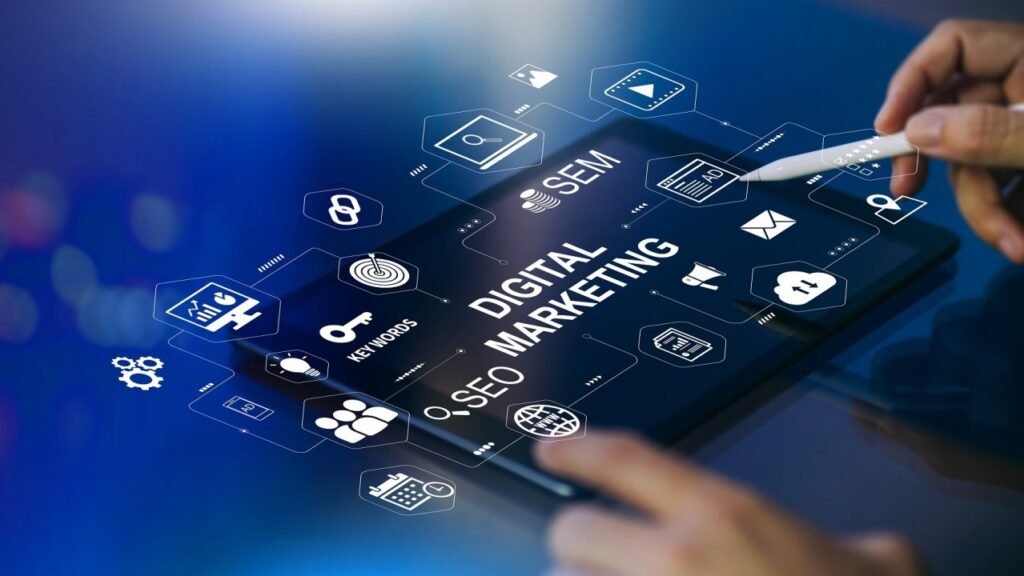
Digital marketing allows businesses to:
- Reach a global audience
- Target the right customers
- Measure campaign performance
- Improve marketing strategies quickly
For example, a small business can run online ads and reach thousands of potential customers within hours. This was almost impossible with traditional marketing.
Another major advantage is data. Digital marketing platforms provide detailed analytics. Marketers can track clicks, website visits, purchases, and user behavior. These insights help businesses understand what works and what doesn’t.
Moreover, digital marketing helps build long-term relationships with customers. Through email newsletters, social media posts, and helpful content, brands can stay connected with their audience consistently.
In short, digital marketing is not just advertising online. It is a complete strategy that involves understanding your audience, creating valuable content, and using digital channels to deliver that value.
Businesses of all sizes—from startups to global corporations—use digital marketing to grow their brands and increase revenue.
The Evolution of Digital Marketing
To fully understand what is digital marketing, it’s helpful to see how marketing evolved over time.
Traditional Marketing Era
Before the internet, businesses relied on traditional marketing channels such as:
- Newspapers
- Magazines
- Television
- Radio
- Billboards
- Flyers and brochures
These methods were effective but expensive. Also, it was difficult to measure results accurately.
For instance, if a company ran a newspaper ad, it was hard to know exactly how many people saw it or took action because of it.
The Internet Revolution
The launch of the internet changed everything.
In the 1990s, businesses started building websites. Soon after, search engines like Google made it easier for people to find information online.
This gave birth to the first major digital marketing channel: Search Engine Optimization (SEO).
Companies began optimizing their websites to appear higher in search results.
Rise of Social Media
In the 2000s, social media platforms like Facebook, YouTube, and Twitter transformed digital marketing again.
Brands could now interact directly with customers.
They could:
- Share updates
- Run ads
- Post videos
- Build communities
This created a two-way communication channel between brands and audiences.
Mobile Marketing
The introduction of smartphones pushed digital marketing even further. Today, most internet users browse the web on mobile devices.
This means businesses must optimize their marketing strategies for mobile users.
Data-Driven Marketing
Modern digital marketing is highly data-driven. Marketers use analytics tools to understand user behavior and improve campaigns continuously.
This ability to track results in real time is one of the biggest reasons digital marketing has become so powerful.
Why Digital Marketing Is Important for Businesses
Understanding what is digital marketing is essential because it plays a major role in business success today.
Here are some key reasons why digital marketing is important.
1. Global Reach
Digital marketing allows businesses to reach customers anywhere in the world. A small company can sell products internationally without opening physical stores.
2. Cost-Effective Marketing
Compared to traditional advertising, digital marketing is much more affordable.
For example:
| Marketing Type | Average Cost | Reach |
|---|---|---|
| TV Advertising | Very High | Local/National |
| Newspaper Ads | High | Local |
| Social Media Ads | Low | Global |
| SEO | Medium | Long-Term Global |
This makes digital marketing ideal for startups and small businesses.
3. Targeted Audience
One of the biggest advantages of digital marketing is precise targeting.
Businesses can target users based on:
- Location
- Age
- Interests
- Online behavior
- Search history
This ensures marketing messages reach the right audience.
4. Measurable Results
Digital marketing platforms provide real-time analytics. Marketers can see:
- Website traffic
- Conversion rates
- Ad performance
- Customer engagement
These insights help improve future campaigns.
5. Better Customer Engagement
Digital marketing enables direct communication between brands and customers.
Through social media comments, emails, and live chats, businesses can respond to customer questions quickly.
This builds trust and strengthens relationships.
6. Higher Conversion Rates
Because digital marketing targets interested users, conversion rates are usually higher than traditional marketing methods.
For example, someone searching for “best laptops online” is already interested in buying a laptop. Showing them an ad at that moment increases the chances of a sale.
Core Components of Digital Marketing
To truly understand what is digital marketing, it’s important to explore its key components.
Digital marketing includes several channels that work together to attract and convert customers.
Search Engine Optimization (SEO)
SEO is the process of optimizing a website to rank higher in search engines like Google.
When users search for information, they usually click the first few results. SEO helps websites appear in those top positions.
Common SEO techniques include:
- Keyword research
- On-page optimization
- Link building
- Technical SEO
- Content creation
Learn more about SEO from this helpful guide:
https://developers.google.com/search/docs/fundamentals/seo-starter-guide
Content Marketing
Content marketing focuses on creating valuable information for audiences.
Examples include:
- Blog posts
- Videos
- Guides
- Infographics
- Podcasts
Good content builds trust and authority in a particular industry.
Social Media Marketing
Social media marketing uses platforms like:
- YouTube
Businesses share posts, run advertisements, and interact with followers.
This helps increase brand awareness and customer engagement.
Pay-Per-Click Advertising (PPC)
PPC is a form of paid advertising where businesses pay only when someone clicks their ad.
Popular PPC platforms include:
- Google Ads
- Facebook Ads
- LinkedIn Ads
These ads appear in search results or social media feeds.
Email Marketing
Email marketing remains one of the most effective digital marketing strategies.
Businesses send newsletters, promotions, and updates directly to subscribers.
Benefits include:
- Personalized communication
- High return on investment
- Direct customer relationship
Affiliate Marketing
Affiliate marketing involves promoting products through partners.
These partners receive commissions when they generate sales through their referral links.
This strategy allows companies to expand marketing reach without upfront advertising costs.
15 Powerful Digital Marketing Strategies
Now that we understand what is digital marketing, let’s explore powerful strategies businesses use.
1. Search Engine Optimization
2. Content Marketing
3. Social Media Marketing
4. Influencer Marketing
5. Email Marketing
6. Video Marketing
7. Affiliate Marketing
8. Mobile Marketing
9. Conversion Rate Optimization
10. Retargeting Ads
11. Local SEO
12. Voice Search Optimization
13. Marketing Automation
14. Community Building
15. Data-Driven Marketing
Using multiple strategies together produces better results than relying on only one channel.
Digital Marketing Tools Businesses Use
Digital marketers rely on several tools to manage campaigns.
| Tool Type | Example Tools |
|---|---|
| SEO Tools | Ahrefs, SEMrush |
| Analytics | Google Analytics |
| Social Media | Hootsuite |
| Email Marketing | Mailchimp |
| Design | Canva |
| Automation | HubSpot |
These tools simplify campaign management and improve performance.
Skills Required to Become a Digital Marketer
Anyone interested in learning what is digital marketing should also understand the skills required.
Key skills include:
- SEO knowledge
- Content writing
- Data analysis
- Social media management
- Advertising strategy
- Basic website development
- Creativity
- Communication
Continuous learning is essential because digital marketing evolves quickly.
Career Opportunities in Digital Marketing
Digital marketing offers many career paths.
Popular roles include:
- SEO Specialist
- Digital Marketing Manager
- Social Media Manager
- Content Strategist
- PPC Expert
- Marketing Analyst
Freelancing and digital marketing agencies are also growing rapidly worldwide.
Future Trends in Digital Marketing
Digital marketing continues evolving every year.
Important trends include:
- Artificial intelligence in marketing
- Voice search optimization
- Video content dominance
- Personalization
- Interactive content
- Privacy-focused marketing
Businesses that adapt to these trends stay competitive in the market.
Frequently Asked Questions
1. What is digital marketing in simple words?
Digital marketing means promoting products or services using the internet and digital platforms like search engines, websites, social media, and email.
2. Why is digital marketing important today?
Digital marketing is important because most customers search for products online. Businesses must be visible online to attract potential customers.
3. What are the main types of digital marketing?
Major types include SEO, social media marketing, content marketing, email marketing, PPC advertising, and affiliate marketing.
4. Can small businesses benefit from digital marketing?
Yes. Digital marketing is cost-effective and allows small businesses to compete with larger companies.
5. How long does digital marketing take to show results?
Some strategies like PPC produce quick results, while SEO and content marketing may take several months.
6. Is digital marketing a good career?
Yes. Digital marketing is one of the fastest-growing industries and offers many career opportunities worldwide.
Conclusion
Understanding what is digital marketing is essential for businesses, entrepreneurs, and marketers today.
Digital marketing uses online channels to promote products, connect with customers, and grow brands effectively. Compared to traditional marketing, it offers better targeting, measurable results, and lower costs.
From SEO and content marketing to social media and email campaigns, digital marketing provides many tools and strategies for business growth.
As technology continues to evolve, digital marketing will only become more important. Businesses that learn and apply these strategies will stay ahead in the competitive online marketplace.